The
Human Kind Project
You've tried a vacation.
You keep coming back the same.

An Evidence-Based Travel Experience
developed by the wellness team at
Senior Healthcare Associates
A Medicare & Medicaid medical practice based in the Pacific Northwest.
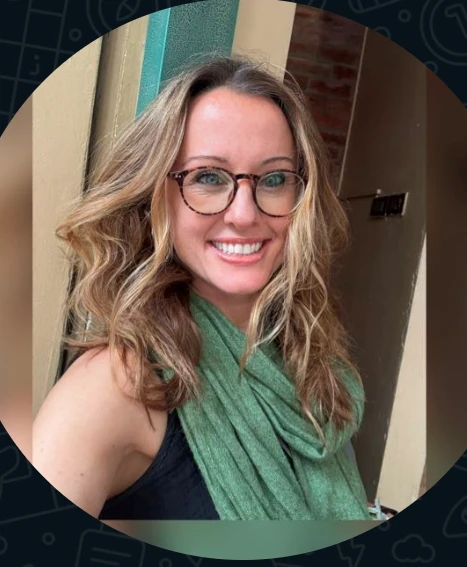
Jenna Sheplock
Pediatric Nurse - 22 Years
Oncology & Post Anesthesia
The Human Kind Project,
Founder
University of Pittsburgh
Live Music Lover
High-Five Giver
"Eventually, my resilience crumbled."
Up to 60%
Nursing professionals who experience physical and/or emotional burnout.
Nearly 150,000
Healthcare professionals leave the field each year.
5
The number of people accepted into each cohort. Every time.

"I didn't go to Calcutta to build something. I went because I was out of ideas.
Twenty-two years in pediatrics, in oncology, in the recovery room, I had tried everything — new contracts, new cities, yoga in Bali, meditation in Nepal. None of it touched what was actually wrong.
I sat with a woman at Kalighat for an hour. She didn't speak English. I didn't speak her language. Nothing was asked of me. She held my face for a brief moment, and something cracked open that hadn't moved in years. She passed away a few hours later.
I came home and I couldn't stop thinking about the nurses and doctors I knew who needed that exact thing and had no path to it. That's why this exists."
Jenna Sheplock,
Pediatric Nurse,
22 years

"Alive, it turns out, is exactly what I was missing."
difficult truths
Burnout
At first, it just feels like being tired.
Then it doesn’t go away.
We’re still showing up. Still doing the work. But the part of you that used to care deeply starts to pull back. Conversations feel shorter. Patience wears thinner. What once felt meaningful begins to feel mechanical.
We tell ourselves we just need a break.
But even after time off, something doesn’t fully reset. Within days, even minutes, we’re back in it—same pace, same pressure, same emotional load.
This isn’t just fatigue.
It’s disconnection.
Not Working
So if you are like me, you try what’s supposed to help.
Vacations. Spa days. Yoga. Exercise. Beaches. Mountains. Anything that allows for a few days to breathe.
And for a moment, it works.
But you return to the same environment—the same system, the same demands, the same patterns—and the feeling comes back faster each time.
Because nothing actually changed.
You didn’t step out of it.
You just paused it.
And over time, that starts to wear on you even more—because now you know rest alone isn’t enough.
**
Solution
This isn’t another break.
It’s a shift in context.
You step into a completely different environment—one that is raw, human, and real. You’re no longer operating inside systems and protocols. You’re face-to-face with people, in a way that brings you back to why you chose this work in the first place.
At the same time, you’re given space.
Not packed schedules. Not forced reflection. Just enough structure to support you—and enough openness to actually process what’s happening.
This combination matters.
Because burnout doesn’t come from working hard. It comes from working in a way that disconnects you. And the only thing that resets that… is reconnecting to something real.
That's the evidence. That's the design.
**
Study by: Qualitative Health Research
The Core Distinction:
A vacation is about you, a tour is about the destination, a cohort is about what happens between people when they show up for something that matters.
True Story
The Human Kind Project was founded by Jenna Sheplock — a pediatric oncology and recovery room nurse and lifelong travel nurse based in the United States.
She knows what it means to chase a reset.
For years, moving was her answer. New city. New unit. New team. The freedom of travel nursing is real — the income, the independence, the change of scenery. And for a while, it worked.
But after 22 years in pediatrics, oncology, and recovery rooms — after witnessing what the field had become, after the weight of administration and families and her own life accumulating in ways that no new contract could outrun — she found herself in the same place she always ended up.
Tired in a way that sleep didn't touch. Exhausted of compassion.
She wasn't burned out from staying still. She was burned out from moving and still not finding what she was looking for.
She found herself searching for something she couldn't quite name. A way back to the pure, simple joy of helping another human being. Not as a professional. Not as a caregiver. Just as a person in a room with another person.
-----
Then, a chance encounter. A passing conversation.
A suggestion that stayed with her.
It led her to Calcutta.
Hailed as the City of Joy, Calcutta is unlike anywhere else.
Home to Mother Teresa's Home for the Destitute and Dying.
To New Light, an organization protecting children born into and living in the red light district.
To the Joypur Ashram, where over 100 orphaned children live and learn together supported by the pension payment of one person only.
She didn't go there to change these worlds.
She went because something in her needed to witness this level of human contact. And, she didn't know it until after.
Somewhere in those moments — quiet, unfiltered, and deeply human — she began to reconnect. Not to a new version of herself, but to something that got lost along the way over the years. How to feel, really feel.. To connect.
Human to human.
The Human Kind Project came from that experience.
Not as an idea. But as something that had to exist for those of us who were burned out or, worse, disillusioned.
It was a way for medical professionals — especially the ones who have already tried everything, including vacations and breaks — to step into a completely different world for a moment of their lives and come back changed. Even just a little.
-----
This is not self-help. It is not another vacation. It is not a volunteer trip.
This is dropping the adult responsibility of healthcare and just connecting to those who have nothing to offer but a smile, a shrug, a laugh or the ultimate sacred act - death.
You will not need to worry about where you will stay, what you will eat, where you will spend your time. We've taken care of that.
Just show up as you are.
In doing so you will have the chance to experience humanity in its many forms — and to feel something shift, just as it did for Jenna.
First, you are humbled. Then something cracks open.
It is a risk. Adventures of the heart often are.
A world without judgment. Without expectation. Without entitlement.
There will be laughter and there will be tears. Sometimes hours apart.
There will be moments you don't have words for and others you want to share with the world.
And in the end — something comes back with you.
A travel experience unlike anything in your recent memory.
That's the
Human Kind
Project.


What Surprises Most First-time Visitors
How safe and welcoming Calcutta feels.
How quickly they stop thinking about work.
How much they look forward to the mornings.
How much they value the unscheduled afternoons.
How difficult it is to explain the experience afterward.
And there's a Starbucks Reserve!

Every cohort runs the same way
Almost
Mornings alongside the Sisters at Mother Teresa's Home for the Destitute and Dying, or with the children at New Light — an organization serving children born into one of the world's largest red light districts. It's face-to-face. No buffer. No protocol. Just presence. You will be surprised — painfully and pleasantly.
Most afternoons are yours. Take a nap, unwinde, integrate.
Early evenings open into Calcutta — we have daily excursions that range from her flower markets to her temples. From her food to the ancient Ganges at dusk. Calcutta isn't a tourist trap it is real.
Your cohort is held together by a fellowship that only forms when everyone in the room has lived the same thing.
This is not a vacation. It's an experience.
Five people. Everything taken care of. Just bring yourself.
Evidence-based. Human-centered. Intentionally crafted.
Our Cohorts & Pricing

October
Transition. Energy. Awakening.

November
Clarity. Celebration. Movement.

December
Stillness. Depth. Ease.

January
Felt. Contrast. Perspective.

February
Lightness. Openness. Renewal.

March
Heat. Energy. Endurance.
This is not for everyone
That's by design.
The Human Kind Project is small by intention.
Five people per cohort. Exclusive and carefully chosen.
We were founded by a healthcare worker so our inquiries reflect that — but burnout doesn't belong exclusivly to the healthcare profession.
If something here stayed with you — that's enough to start.
We want to understand where you are, what your crossroad is like, and whether this is the right moment for you.
The first step is a short conversation. We do not pitch. We do not pressure. We share our experience and see if this would be beneficial to you.
We'll walk you through what a day actually looks like — the mornings, the evenings, the food, the climate. We'll talk flights, timing, and whether the fit feels right for where you are right now.
Prefer to contact us directly?
Reach our Calcutta team on WhatsApp at +91 836 982 6560
-----
This may be the thing you've been looking for without knowing what to call it.
